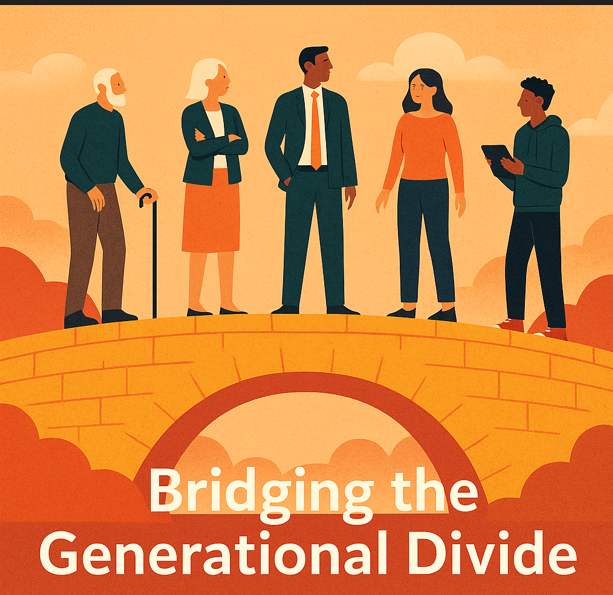
Bridging the Generational Divide: Preparing South African Workplaces for a Multigenerational Future
By Sameera Ahmed | June 2025
“Generational differences aren’t problems to solve — they’re opportunities to unlock.”
A Tapestry of Ages, Cultures, and Expectations
Walk into any modern South African workplace today and you’ll likely find five generations working side by side:
- Traditionalists (born before 1946)
- Baby Boomers (1946–1964)
- Gen X (1965–1980)
- Millennials (1981–1996)
- Gen Z (1997–2012)
It’s a powerful mix of wisdom, innovation, and identity — but also a complex challenge if not managed with intention.
In a country still navigating economic strain, skills mismatches, and transformation pressures, generational intelligence isn’t a luxury — it’s a strategy.
Generations at a Glance
Generation | Birth Years | Key Traits |
Traditionalists | Before 1946 | Loyalty, discipline, respect for authority |
Baby Boomers | 1946–1964 | Hard work, hierarchy, job security |
Generation X | 1965–1980 | Independence, adaptability, work-life balance |
Millennials | 1981–1996 | Purpose-driven, tech-savvy, feedback-oriented |
Generation Z | 1997–2012 | Digital natives, socially conscious, bold |
In South Africa, these broad definitions are layered with unique socio-political realities. A Gen Xer here may have launched their career during the birth of democracy. A Gen Z job seeker enters a market shaped by load shedding, digital fluency, and economic inequality.
Why the Divide Matters
If left unaddressed, generational differences can show up as:
- Communication gaps: Emails vs instant messaging
- Value clashes: Loyalty measured by hours vs alignment to purpose
- Leadership disconnect: Top-down control vs inclusive collaboration
- Tech friction: Varying digital confidence and expectations
The result? Turnover, disengagement, poor succession, and eroded culture.
What Can HR and Leadership Do?
Here are five key steps to bridge the gap:
- Cultivate Generational Intelligence
Train managers to understand generational differences without falling into stereotypes. Use personas and employee profiles to adapt engagement strategies.
- Build a Culture of Mutual Respect
Create reverse mentoring, collaboration circles, and cross-age team initiatives. Honour both experience and fresh thinking.
- Design Flexible Work Models
Support hybrid work, phased retirement, career pivots, and caregiving leave. Flexibility isn’t just for Gen Z — it supports everyone.
- Offer Growth & Feedback at Every Stage
Provide reskilling for older staff, onboarding support for younger hires, and lifelong learning opportunities for all.
- Develop Inclusive Leaders
Equip managers with emotional intelligence and a coaching mindset to lead multigenerational teams effectively.
The Risk of Inaction
If we don’t act:
- Talent will walk: Especially younger staff who seek modern, purpose-driven workplaces
- Knowledge will vanish: As older employees retire without knowledge transfer
- Innovation will slow: Collaboration fuels creativity — silos kill it
- Morale will suffer: Generational conflict undermines inclusion and cohesion
From Tension to Transformation
South Africa is already a nation of contrasts. We don’t need more workplace division.
We need deliberate integration.
Generational diversity is not a problem to fix — it’s a potential to unlock. When we build workplaces that embrace age complexity, we build businesses that are more agile, human, and future-ready.
The future of work belongs to those who can unite experience with innovation, wisdom with curiosity.
Let’s Build What’s Next
At Pinnacle HR, we help you align people, performance, and purpose — across every generation.
Reach out to explore tailored strategies that future-proof your workforce and turn generational diversity into a competitive advantage.